Urgent assisted living placement: what to do when a parent can't wait
By Nathan Ibrahim · Updated 2026-08-11
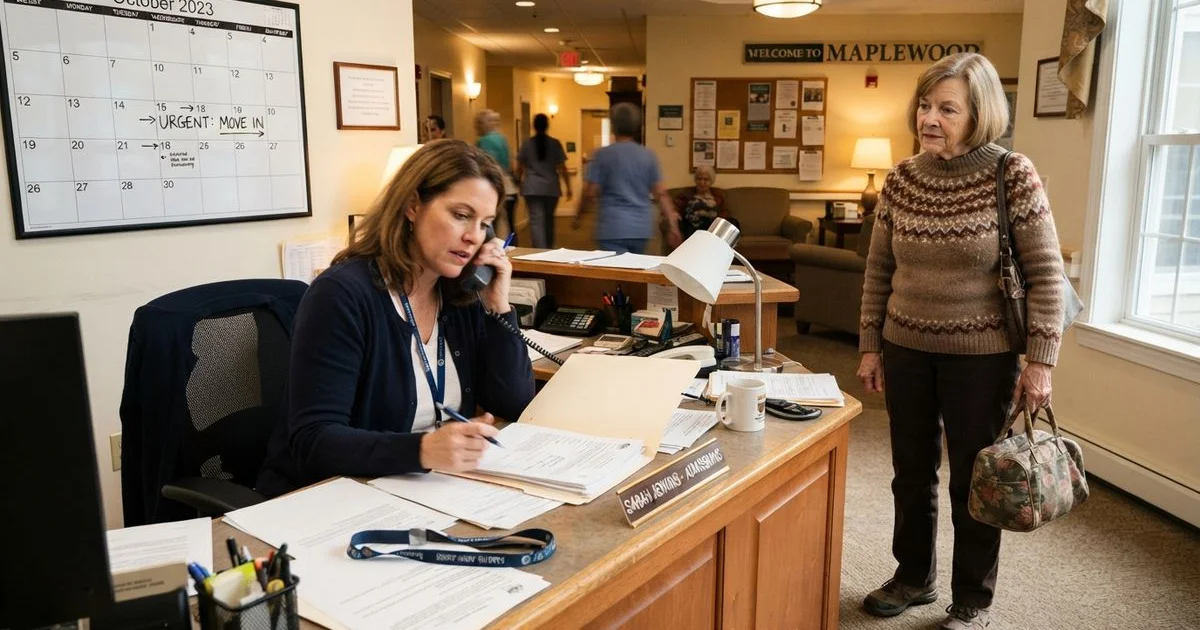
A fall, a safety incident at home, or a caregiver reaching a breaking point can turn a months-long research project into a decision you need to make in days. This guide is for that situation: a parent who genuinely can’t wait for the normal, unhurried tour-and-compare process, and a family trying to move fast without skipping the checks that actually matter.
This is general information, and every situation is different; if there’s an active medical emergency, seek emergency medical care first.
Move fast on the things that matter, not everything
Under time pressure, it helps to separate what you can shortcut from what you shouldn’t. Room finishes, amenity lists, and activity calendars can wait for a closer look after move-in. Staffing levels, medication management practices, and whether the community can actually meet your loved one’s specific care needs cannot.
| Step | What to do |
|---|---|
| 1. Call ahead, don’t just search online | Call communities directly to confirm real-time availability; websites often don’t reflect current openings |
| 2. Ask the hard questions first | Staffing ratio, medication handling, and whether they can meet specific care needs (mobility, memory, medical) |
| 3. Get a same-day or next-day visit if at all possible | Even a short in-person visit beats none; ask for a video walkthrough if truly impossible |
| 4. Clarify what’s needed to move in fast | Medical records, a physician’s assessment form, and payment source information are usually required before admission |
| 5. Treat it as a starting point, not a forever decision | A move made under pressure can be revisited once things stabilize |
Consider a respite or short-term stay first
If the full picture, budget, care level, long-term fit, isn’t yet clear, a short-term or respite stay can buy time without leaving a parent unsupervised. This lets a family do a more thorough search in the following weeks while a loved one is safe and cared for, and it also gives everyone a real trial run at a specific community before committing to a permanent move. Not every community offers this, so ask directly.
What to gather before you call
Having a few things ready speeds up the process significantly: a list of current medications, a summary of daily care needs (mobility, memory, medical conditions), a rough sense of budget or payment source, and contact information for the person’s doctor. Communities that are used to fast placements will often walk you through exactly what they need, but having this ready before you call saves real time.
Involve the person as much as you can
Even under time pressure, involving the person who’s moving, when they’re able to participate, tends to make the transition go more smoothly. A rushed move that feels like something being done to someone rather than with them can add confusion and resistance on top of an already stressful situation. If a full conversation isn’t possible because of the circumstances, even small choices, which photos to bring, what to pack first, can help someone feel less like a passenger in their own life change.
Don’t skip the follow-up
Once move-in happens, plan a follow-up visit within the first few days, not weeks. Check in on how medications were transferred, whether the care plan reflects what was discussed on the phone, and how your loved one is actually adjusting. Fast placements sometimes involve information getting lost between the phone call and the actual admission, and an early follow-up catches that before it becomes a bigger problem.
It’s okay to revisit the decision later
A placement made under pressure doesn’t have to be permanent. Once the immediate crisis has passed, it’s worth doing the fuller evaluation you might have skipped: a proper in-person tour at a normal pace, checking sentiment and inspection history, and comparing against other options. If the fast placement isn’t working out, most residents can transfer to a different community once the situation is stable, though timing depends on availability elsewhere.
See our scoring methodology for how we evaluate providers in the region, or visit the home page to start browsing options even under time pressure.
Common questions
- Can someone actually move into assisted living within a few days?
- Often, yes, if a community has an open unit and the paperwork moves quickly. Ask directly about current availability and what the fastest realistic move-in timeline looks like, since it varies a lot by community and time of year.
- Is a fast move-in a bad sign about a community?
- Not necessarily. Availability depends on current occupancy, not care quality. A well-regarded community can have an open unit simply because someone recently moved out or into a higher level of care.
- What if there's no time to tour in person first?
- Ask for a video walkthrough if an in-person visit truly isn't possible before move-in, and plan to do a full in-person evaluation within the first week or two once the immediate pressure eases, so you can course-correct if needed.
- Is a short-term or respite stay an option while we keep looking?
- Yes, and it's often a good bridge. A respite stay buys time to do a more thorough search without leaving a parent unsupervised at home, and some families use it to test whether a community is a good long-term fit before committing.