How to talk to a parent who refuses assisted living
By Nathan Ibrahim · Updated 2026-08-17
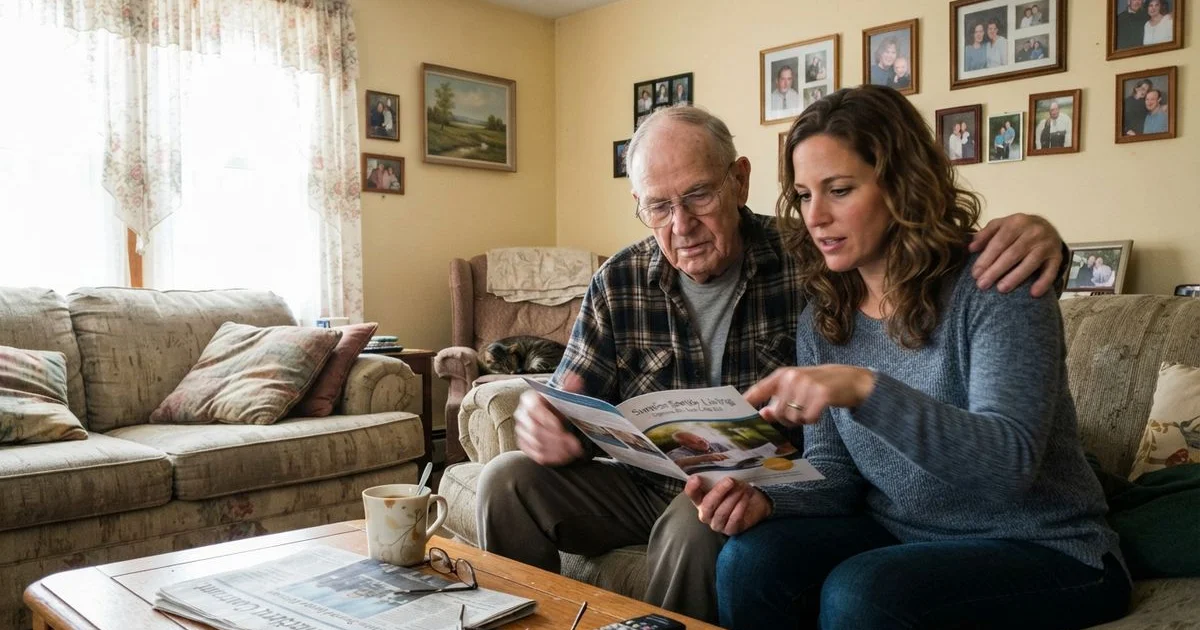
A parent digging in against the idea of assisted living is one of the most common, and most emotionally exhausting, parts of this whole process. It’s rarely really about the facility itself. It’s usually about what the move represents: losing independence, admitting decline, leaving a home full of memories. Understanding that underlying fear changes how you approach the conversation.
What tends to backfire
Leading with statistics, safety data, or a list of everything going wrong tends to make a parent defensive rather than receptive, even when every point is accurate. Ultimatums also rarely work well; being told “you have to do this” tends to trigger resistance even in a parent who might otherwise come around given more time. And a single big conversation meant to resolve everything at once usually just raises the emotional stakes without actually moving anyone closer to a decision.

What tends to actually help
Start with listening rather than persuading. Ask what specifically worries them about the idea, loss of privacy, leaving the house, being around strangers, and take the answer seriously rather than treating it as an obstacle to argue past. Often the real concern is narrower and more addressable than the general resistance suggests.
Frame the conversation around what they’d gain, not just what they’re being asked to give up: less worry about cooking or cleaning, company and activities instead of isolation, help available if something goes wrong at 3am. Loss-framed conversations tend to trigger more resistance than gain-framed ones, even when describing the exact same change.
Bring in outside authority where it helps. A physician’s recommendation often lands differently than the same point coming from an adult child, since it can feel like medical guidance rather than a family member asserting control. If safety is a genuine, immediate concern, a doctor or geriatric care manager can sometimes make that case more effectively than family alone.
Try a low-stakes first step
Suggesting a tour, with no commitment attached, is often easier for a resistant parent to agree to than a direct conversation about moving. Actually seeing a community, meeting other residents, and getting a sense of daily life there can shift a parent’s mental image away from whatever worst-case scenario they’ve been picturing. A short respite or trial stay is an even lower-stakes version of the same idea, giving a parent a real experience to react to instead of an abstract decision to make. If the search is also complicated by living out of state, our guide to moving a parent from out of state covers what can be handled remotely and what’s worth a trip.
Getting siblings on the same page first
If more than one adult child is involved, disagreement among siblings can undercut even the best-planned conversation with a parent. One sibling pushing hard while another downplays the concern gives a resistant parent an easy way to pick the answer they prefer and dismiss the rest. Before approaching a parent, it’s worth having a separate conversation among siblings to agree on the core concerns and a shared approach, even if you don’t agree on every detail. A parent who senses a united, caring family behind the conversation tends to respond differently than one who senses conflict they can use to stall.
When the timeline can’t wait
Sometimes there isn’t room for a slow, multi-conversation approach, a fall, a safety incident, or a rapid decline changes the calculus. In those situations, it’s still worth acknowledging the emotional weight of what’s happening even while moving faster than you’d ideally like. A parent who feels heard, even during a rushed decision, tends to adjust better afterward than one who feels the decision was made entirely without them.
Take care of yourself in this too
These conversations are draining, sometimes over months, and it’s common for the adult child leading them to end up exhausted and second-guessing every word choice. That’s a normal part of the process, not a sign you’re handling it badly. Involving a sibling, a counselor, or a caregiver support group, even just to process the conversations themselves, can make a meaningful difference in how sustainable this whole process feels.
See our scoring methodology for how we evaluate communities in the region, or visit the home page when your parent is ready to start looking.
Common questions
- Why do so many parents resist the idea of assisted living, even when it's clearly needed?
- Loss of independence is the most common reason. Moving to assisted living can feel like an admission that they can no longer manage their own life, and that fear often shows up as resistance or denial rather than an honest conversation about the underlying worry.
- Should I involve a doctor in the conversation?
- Often, yes. Many parents will accept guidance from a physician more readily than from an adult child, since it can feel less like a family member taking control and more like a medical recommendation from someone with authority on the subject.
- What if my parent has dementia and can't really weigh in on the decision?
- This changes the conversation significantly. If cognitive decline means a parent can't reasonably assess their own safety, the decision may need to shift toward the family member with legal authority (often through a healthcare proxy or power of attorney), while still treating the parent with as much dignity and involvement as their condition allows.
- How many conversations does this usually take?
- More than one, almost always. Treating it as a single conversation that needs to end in agreement tends to raise resistance. Most families find it works better as an ongoing series of shorter conversations that build toward a decision over weeks or months, unless safety concerns make that timeline unrealistic.