Touring an assisted living or memory care community: questions to ask and red flags to watch for
By Nathan Ibrahim · Updated 2026-07-22
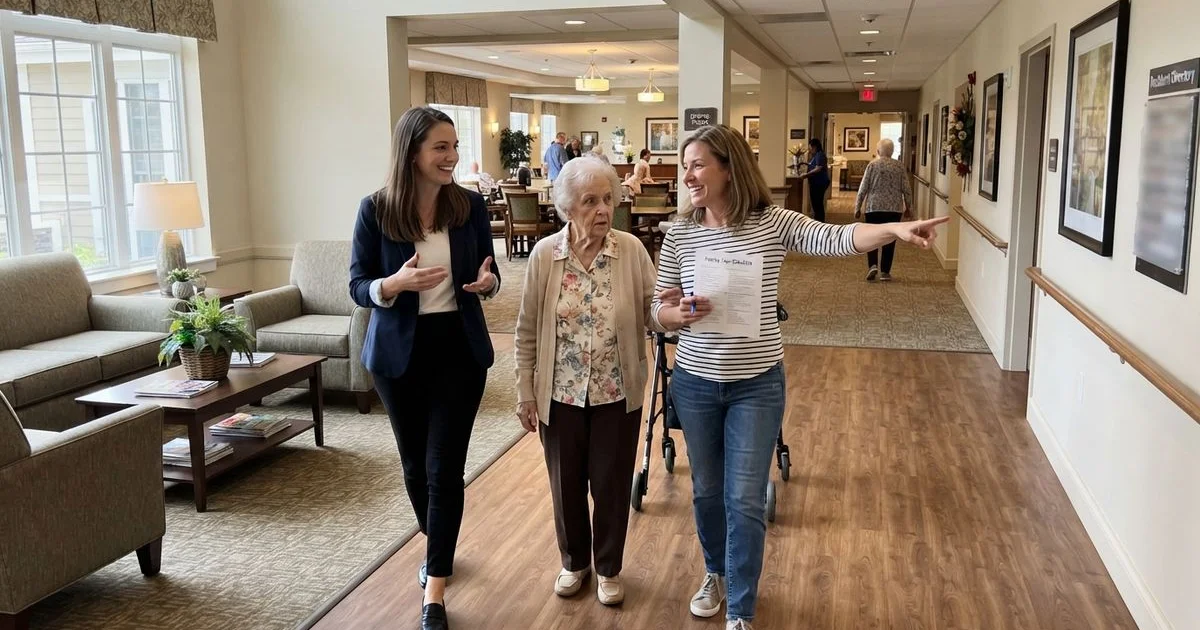
A scheduled tour is designed to show a community at its best. That’s not dishonest, most communities genuinely want to put their best foot forward, but it means you need a plan for what to ask and what to notice beyond the polished walkthrough. This guide covers the questions and signals that matter most, drawn from what families in the Hartford area consistently report mattering after they’ve moved a loved one in.
Before you go: what to ask on the phone
Save time by confirming a few basics before you schedule an in-person visit: current availability and wait list status, the base rate and what it includes, whether the community accepts Medicaid if that’s relevant to your situation, and whether they offer memory care on site or only standard assisted living. This screens out communities that won’t work before you spend an afternoon touring one. If you’re not yet sure which level of care actually fits, our guide comparing assisted living, memory care, and skilled nursing can help you narrow the search first.
What to watch for during the visit
Staffing and responsiveness matter more than almost anything else. Notice how quickly staff greet you, whether call lights or intercom requests get answered while you’re standing there, and whether staff seem to know residents by name rather than treating them as a room number. Families who report the strongest experiences almost always mention staff who remember names and small personal details, beyond competent task completion.
Pay attention to the residents themselves, not the building alone. Do they look engaged, or are most sitting alone without interaction? Ask to see an actual activity calendar from the past month, not a marketing brochure, and ask how participation is tracked for residents who might not join on their own.
| Reassuring sign | Red flag |
|---|---|
| Staff greet residents by name, unprompted | Staff seem unfamiliar with residents they pass |
| Call lights or requests answered promptly during your visit | Long waits or an unattended nurse call station |
| Recent, specific activity calendar available | Vague answers about programming, or only a generic brochure |
| Clear, written answer on what triggers a rate increase | Vague or evasive answers about pricing and add-on fees |
| Willingness to connect you with a current resident’s family | Reluctance to provide any references or contact points |
| Consistent staff you can name across multiple visits | High visible staff turnover or unfamiliar faces each visit |
Questions worth asking directly
- What’s the staff-to-resident ratio, and does it change overnight?
- How is medication managed, and what happens if a dose is missed or delayed?
- What’s the process if a resident’s care needs increase, does the rate change, and how is that communicated?
- How does the community handle a medical emergency, and how quickly are families notified?
- What do current families say is the hardest part about living here?
That last question is worth asking directly. A community that can answer honestly, rather than deflecting to only positive talking points, is usually one that takes feedback seriously.
If you’re touring for memory care specifically
A memory care tour needs a few extra checks beyond a standard assisted living visit. Ask how the community assesses elopement risk, meaning the chance a resident could leave a secured area unsupervised, and what physical safeguards are in place beyond a locked door: alarmed exits, secure outdoor courtyards residents can still access, and how staff are trained to redirect confusion or agitation without escalating it.
Watch how staff interact with residents who seem confused or distressed during your visit, if that happens to come up naturally. A calm, patient redirection says more about training quality than any brochure claim. Ask directly what a typical day looks like for someone in a more advanced stage of cognitive decline, not just for a higher-functioning resident, since the answer for the harder cases tells you more about real capability.
Visit more than once, and at a different time
A single scheduled tour tells you how a community performs when it knows you’re coming. A second, less formal visit, at dinnertime, on a weekend, or in the early evening after most day staff have left, tells you more about the baseline. If a community is reluctant to allow a second, less structured visit, treat that reluctance itself as information.
Once you’ve gathered your notes from a few tours, our scoring methodology explains how we independently weigh rating, review volume, recency, and sentiment, which can be a useful cross-check against your own impressions. Visit the home page to browse communities across the region.
Common questions
- How many communities should I tour before deciding?
- Most families do better touring at least two or three, even when the first one feels right. Comparing a couple of options makes it easier to notice details you'd otherwise miss, and gives you a stronger footing to ask pointed follow-up questions at your top choice.
- Should I bring the resident with me on the tour?
- If they're willing and able, yes, especially for a second visit. Their comfort with the space, the staff, and the pace of daily life matters as much as anything you'll observe yourself, and their reaction can surface concerns a scripted tour won't.
- Is it worth visiting more than once?
- Yes, ideally at a different time of day. A community that looks calm and well-staffed during a scheduled 10am tour can look very different at dinnertime or after staff have left for the evening.
- What if I can't get honest answers from staff during the tour?
- Ask if you can speak with a current resident's family member, or look for online reviews that mention specific staff names and recent dates rather than generic praise. A community confident in its care usually welcomes this kind of scrutiny.